
In a society as historically undocumented as India, and in a region that is notorious for natural calamities like floods, many people cannot produce documents to establish their ancestry.
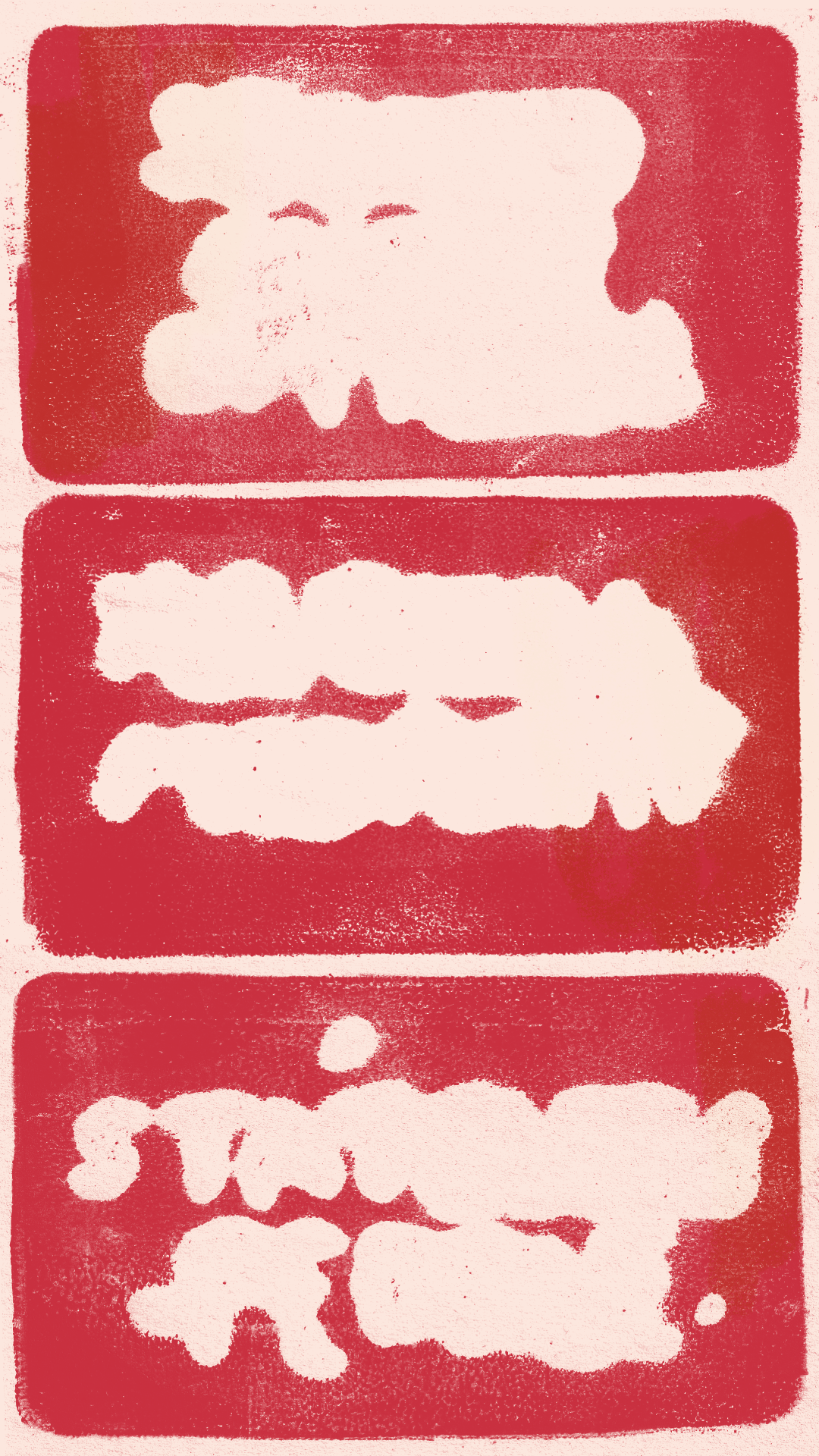
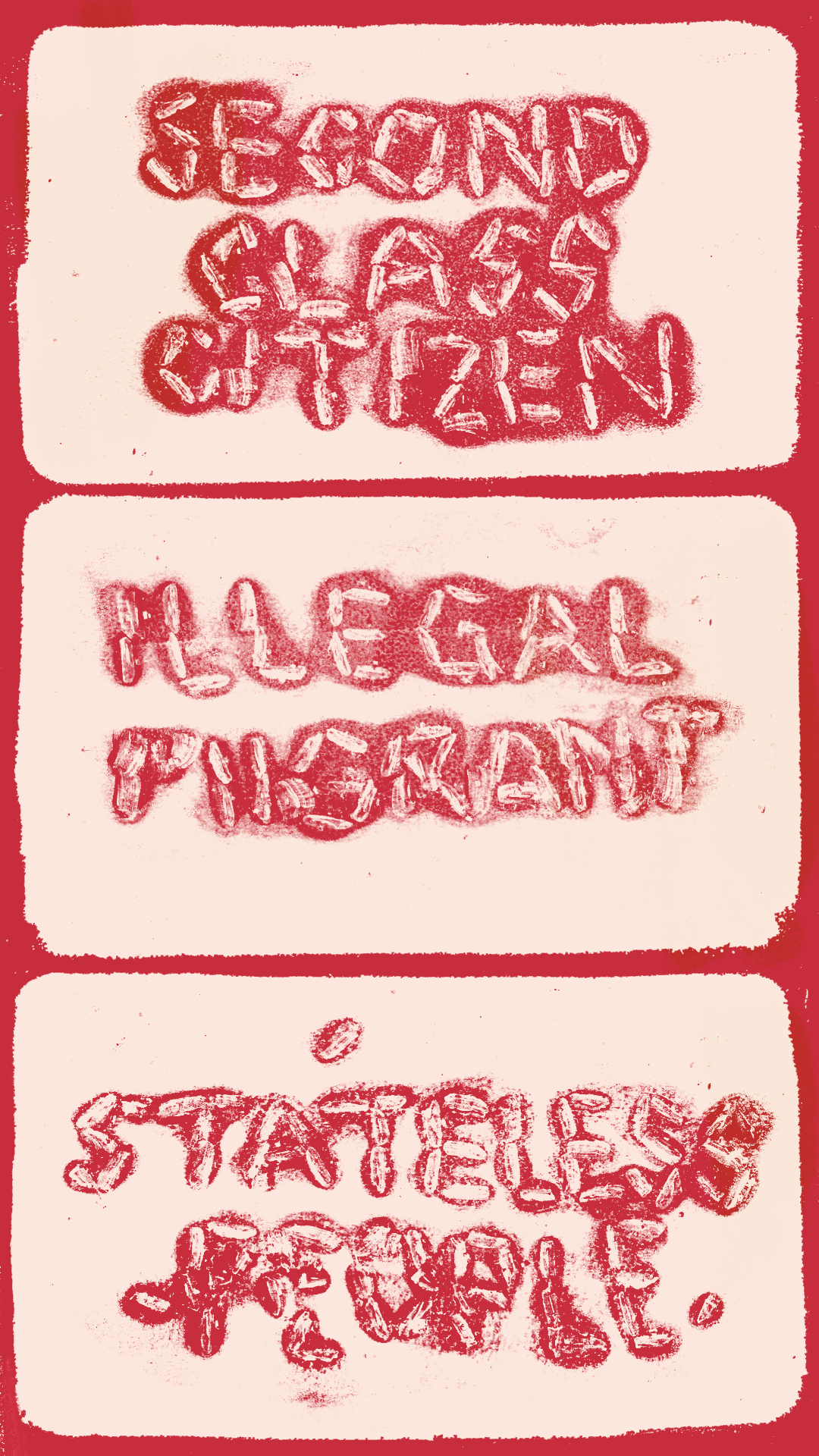
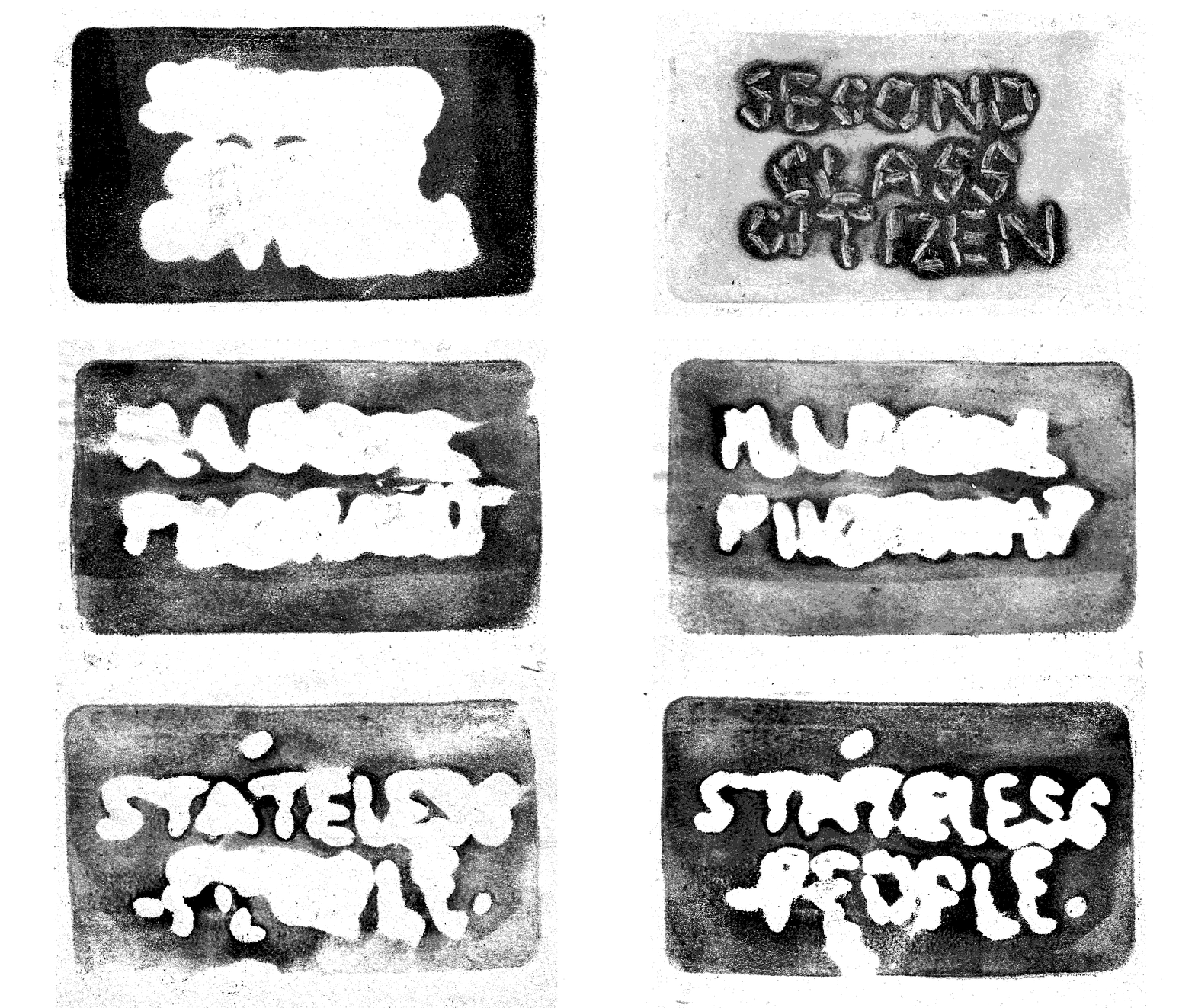
This is made in response to the electoral autocracy exhibited by the Indian government which has mass deleted close to 9 million voters ahead of the assembly elections in West Bengal. Through the Special Intensive Revision (SIR) authorities are effectively choosing the electorate.
In India, a new legal regime and political ecosystem has been enacted for India’s Muslim minority that effectively undermines the constitutional commitment to a pluralist, multi-ethnic and multi-religious civic society.
The Citizenship Amendment Act 2019, as well as two other initiatives, the National Register of Citizens (NRC) and the National Population Register (NPR) had already made 2 million people “doubtful citizens” in neighbouring state Assam.
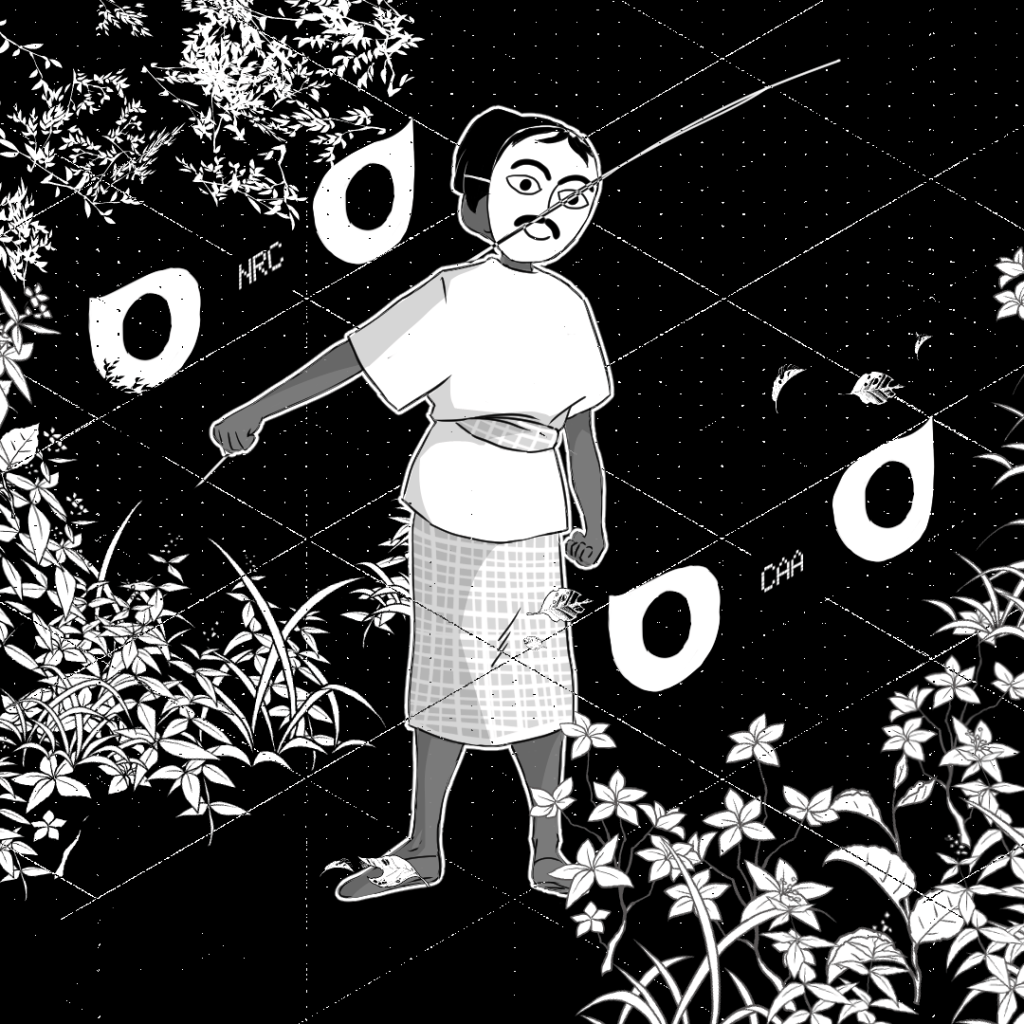
This was made inspired by the honey gatherers of the Sundarbans who wear masks at the back of their heads to (unsuccessfully) misdirect tigers lurking in the forests.
Feels similar to the bizarre citizenship tangle faced by a Bengali resident in Assam. NRC needs them to prove that they’re not Bangladeshi, CAA needs them to prove that they’re persecuted in Bangladesh.
The burden to prove one’s Indian-ness rests entirely on the individual who is subjected to dehumanizing scrutiny at the foreigner’s tribunal. The constitutional design of civic universalism has, in recent times, been undermined by exclusionary nationalism.
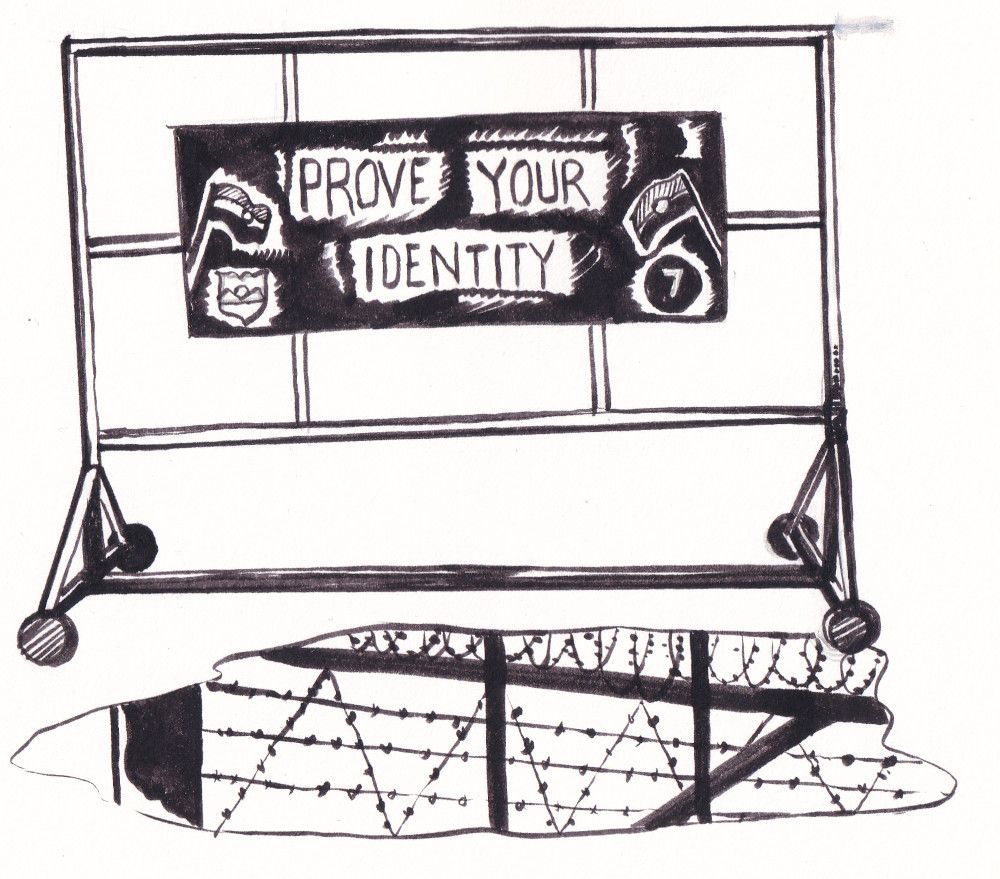
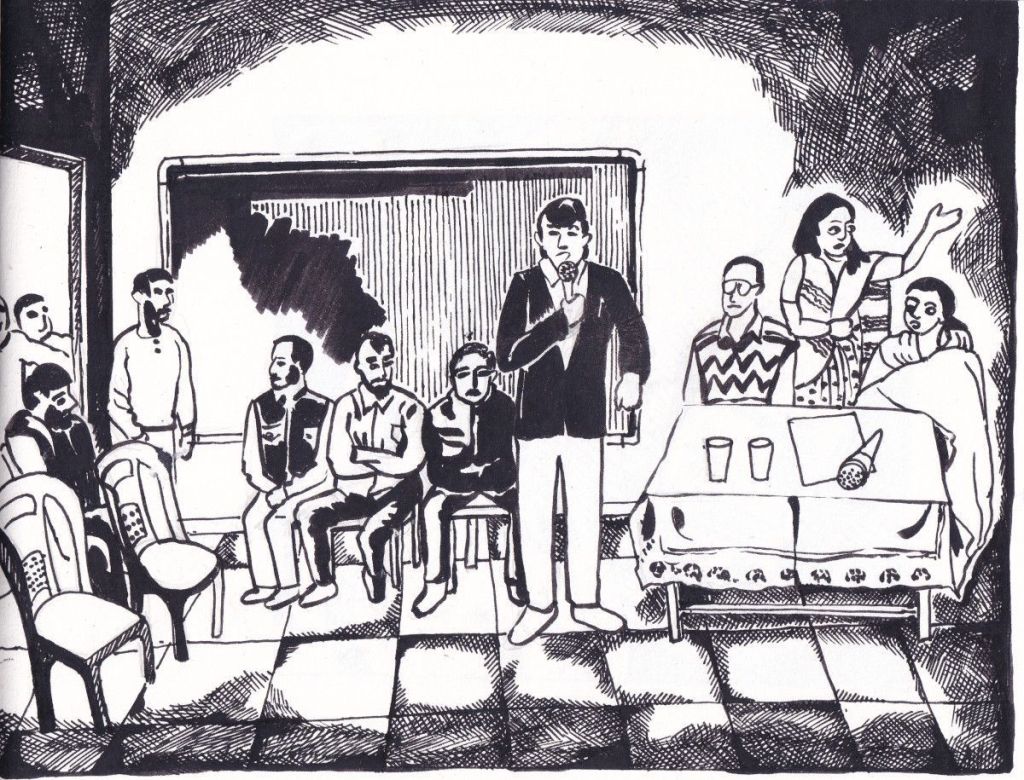
Where We Belong is a testimonial archive made by a nine-member team from Women against Sexual Violence and State Repression (WSS) who visited Assam to understand the implications of updating the National Register of Citizens (NRC), particularly for the most marginalised people of the state. Illustrations by Shefalee Jain
 Aindri C
Leave a comment