
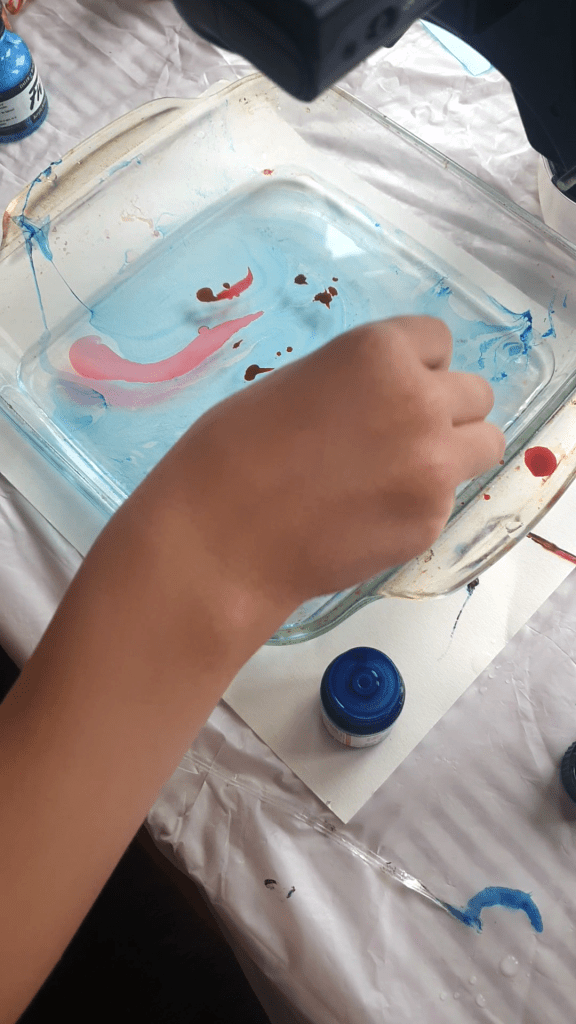
In today’s Nature Printing class we looked at the art of Ebru- a technique developed in the Muslim world possibly in collaboration with Chinese origins during the era of the Silk Road. The word ebru (cloud, cloudy) or abru (water face) is the technique of paper marbling in Turkish.
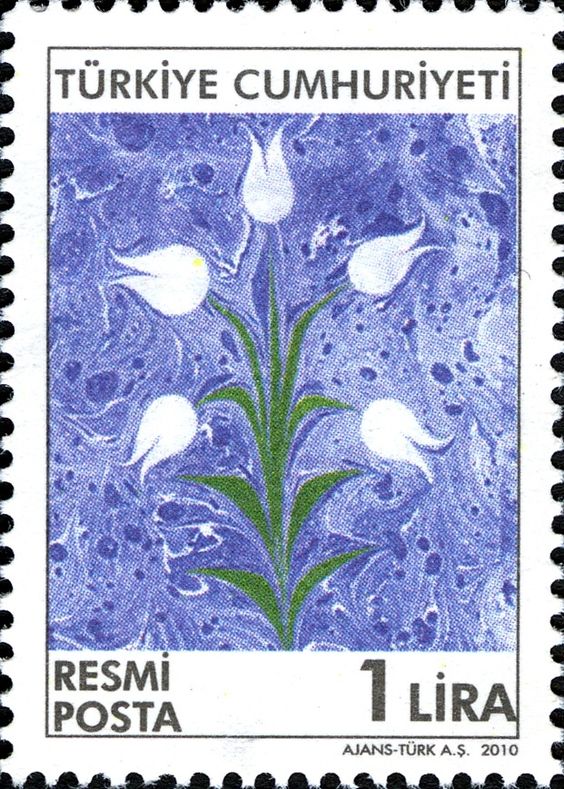
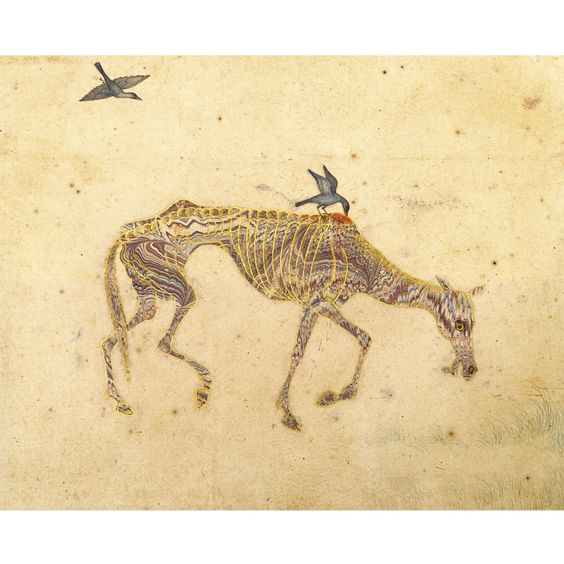
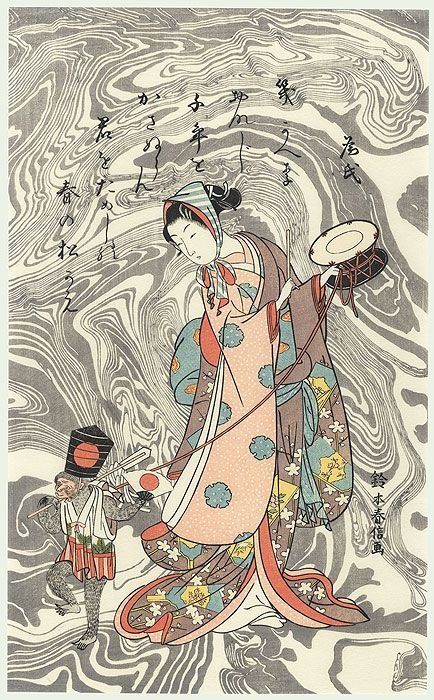
Around the end of 16th century, tradesmen, diplomats and travellers coming to Anatolia brought this art to Europe and after the 1550s, booklovers prized ebru which came to be known as “Turkish Paper” or “Turkish marbled paper making”. In the subsequent centuries of modern times, it was widely used in Italy, Germany, France and England. The papers are called kagaz-e-arabi (South Asia), the floating ink technique is known as Suminagashi (Japan).

Our Class:
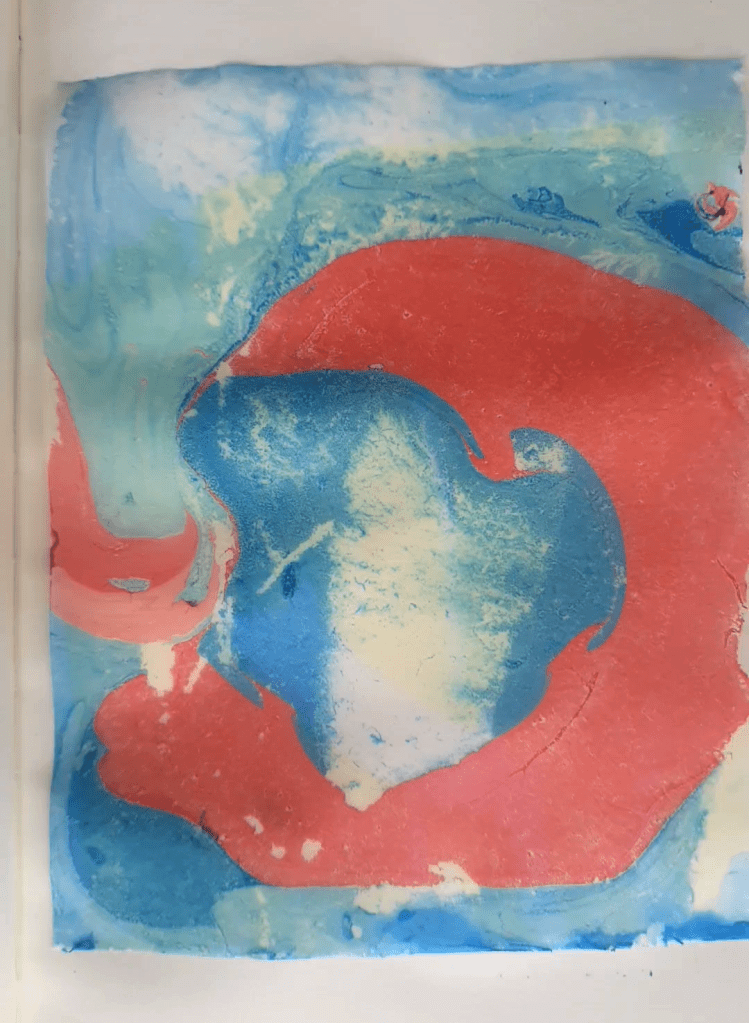
We also tried the anaglyph effect with the marbled patterns.
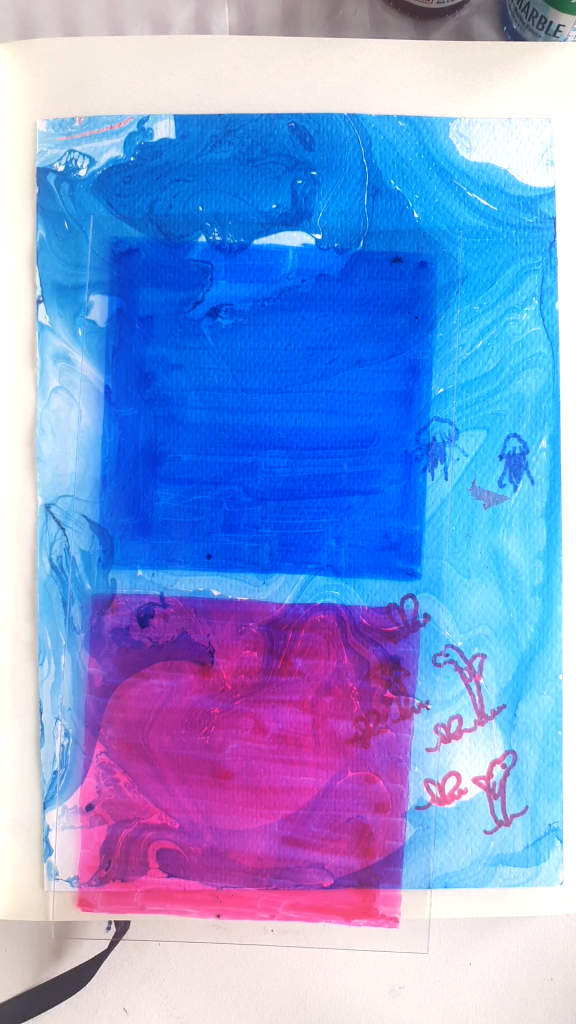
Anaglyph is a method of superimposing a pair of pictures and looking at them through chromatically contrasting filters- usually red and cyan. Anaglyphs are used to create stereoscopic 3D imagery and is often used in films and studying hurricanes and smoke plumes. (JPL/NASA)
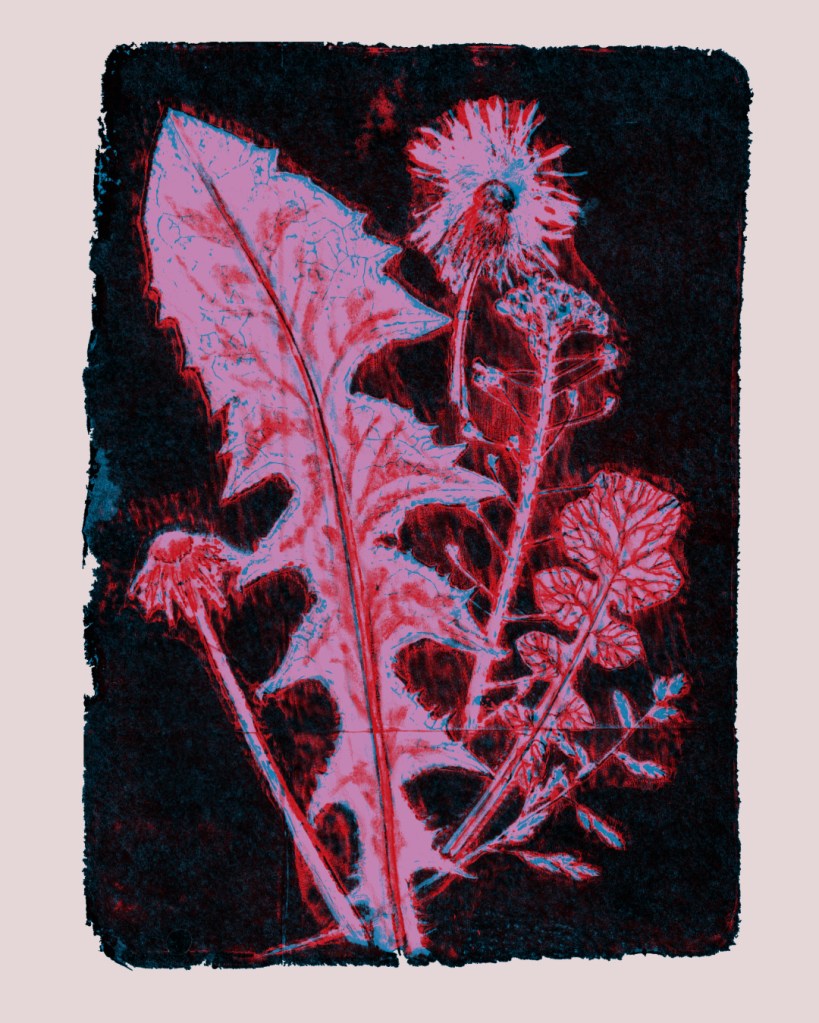
We didn’t get to superimpose the images but used red and blue inks- we saw that each filter obscured elements with the same colour and did the opposite to the other.
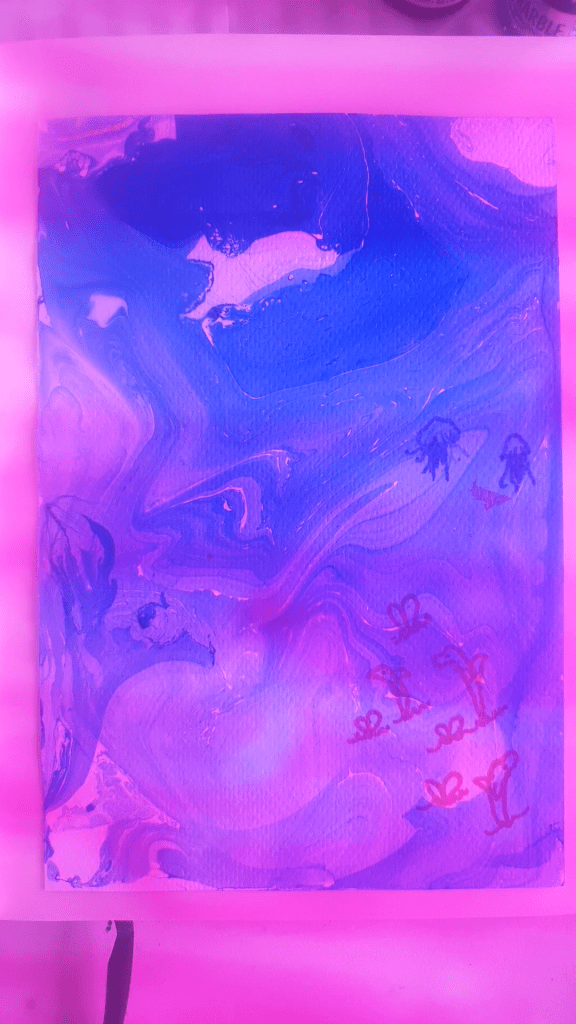
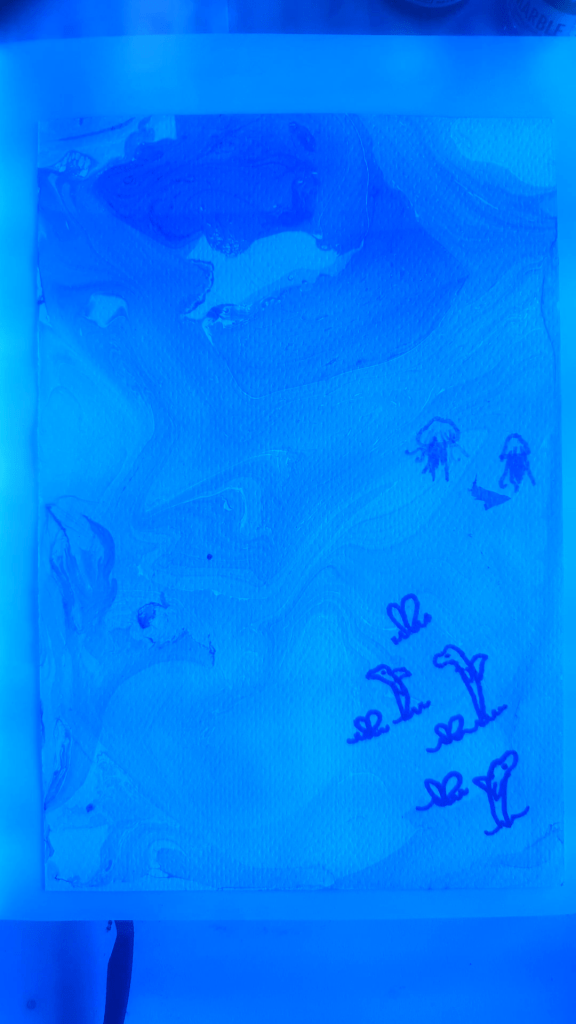
This is something I have experimented with my animated nature prints:

More from our Nature Printing classes:
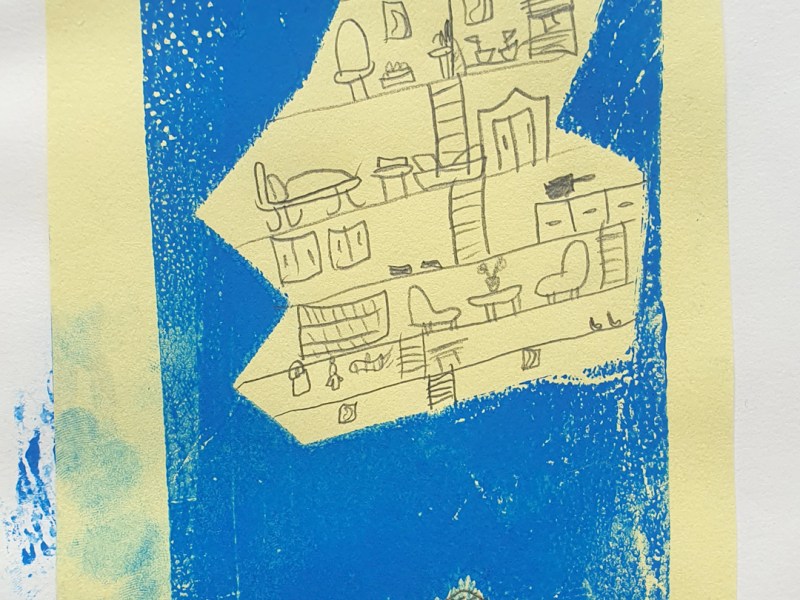
Nature Printing with a 6 yr old
In my eco pedagogy era-
 Aindri C
Leave a reply to Nature Printing with a 6 yr Old – Aindri C Cancel reply